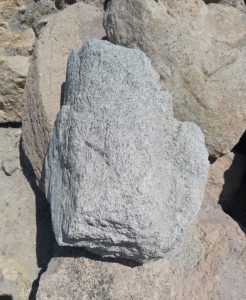
Perlite is an amorphous
volcanic glass tha contains a relatively large amount of water, which isnormally formed by the hydration of obsidian. This happens naturally and gives perlite an unusual property that expands if heated enough. This mineral is a widelyused commercial product with low density after expansion operationClod perlite extracted from the mine without processing has no special application, so it is necessary to perform primary processing including crushing, dehumidification and granulation on it. The company’s processed raw perlite has three common types of granulationSizes: below 1 mm, 1 to 2.5 mm and 2.5 to 5 mm perlite softens by reaching a temperature of 700-900 ° C. The trapped water in the material structure evaporates and exits, causing the material to expand to about 7-16 times its original volume. Expanded material is bright white due to the reflectivity of trapped bubbles. Raw perlite has a bulk density of about 1100 kg / m3, while expanded perlite usually has a density of about 30-150 kg / m3.
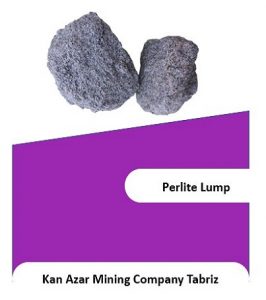
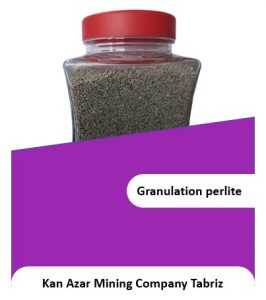
Perlite is an amorphous volcanic glass that contains a relatively large amount of water, which is normally formed by the hydration of obsidian. This happens naturally and gives perlite an unusual property that expands if heated enough. This mineral is a widely used commercial product with low density after expansion operation. Granulated raw perlite is mainly used in the following cases
Expanded perlite as raw material for production
Steel and cast iron industries (completely dry and packaged, with precise granulation and after adding mineral additives “Additive”)
Expanded perlite has many applications, the most important of which are mentioned below
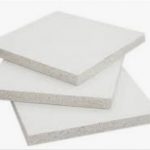
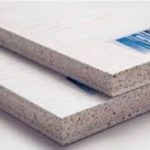
Construction of light and insulating building materials such as cement blocks or in bulk between double-walled walls or flooring of floors mixed with cement, for the construction of perlite insulation boards (large parts with dimensions of 0.5 meters by 1 to 2 meters and a thickness of about 10 centimeters. However, it can be variable), insulation of hot pipes, production of acoustic false ceilings, fireproof coatings of metal structures and plaster-perlite for whitewashing and insulation of walls of houses, workshops and schools that need to be insulated.
Application of perlite in liquid filtration
Expanded perlite size less than 0.5mmtomicronized in vacuum filters and pressesisusedinfoodindustries suchasfactoriesproducingglucoseandfructose,edible oils, vinegar, sugar, fruit juice, pool water treatment and..
Application of perlite in agriculture
Coarse expanded perlite is used for hydroponic agriculturalproducts(foodcropsandsoillessgreenhouse ornamental flowers) and medium grain type is usedtoimproveagriculturalsoils.Thesecondapplication of perlite after the construction industry is in the liquid filtration industry.
Insulation at very low temperatures
As insulation and maintenance of tanks for liquid oxygen,nitrogen,argon,naturalgasandotherindustrial gases that must be stored and transported in liquid form.
Fillers
Pharmaceutical industries (such as antibiotics) paints, plastics, rubber, roof and roof insulation of buildings due to very low weight
Uses of perlite at high temperatures
Used in the manufacture of refractory parts and bricks behind the work (resistance up to more than 1200 degrees Celsius)
Consumption of perlite in abrasives
Perlite is a lightweight abrasive that is used on a small scale as an abrasive in polishers, polishes, cleaners and rust removers.Micronized expanded perlite is also used to make toothpaste.
Consumption of perlite as an oil and oil absorber
Expanded perlite containing waterproofing materials is used to eliminate seawater pollution in the event of an accident for tankers.
Consumption of perlite in cementing wells
Perlite mixture with drilling mud is used in oil, gas and water drilling.
Mixture of perlite and cement
It is widely used for parts that are exposed to moisture or exterior surfaces of buildings
Chemical applications
Expanded perlite is used as a suitable carrier for carriers of insecticides, pests, chemical fertilizers and so on. In this case, perlite absorbs moisture without being pelleted and can be easily recycled when used.
The granulated raw perlite is heated before it enters the expansion furnaceThis is called preheating. The temperature of this stage is about 400 degrees Celsius. The main reason for this is to obtain coarse expanded grains, because if preheater is not used, coarse expanded perlite can not be produced.. Coarse-grained expanded perlite is mainly used in the production of lightweight concrete components such as lightweight cement blocks, as a substrate in agriculture without hydroponic soil, or as a sound and heat insulator. After the preheating stage, the perlite enters the main vertical furnace with a certain flow rate and receives a temperature between 700 and 1000 degrees Celsius. Due to this heat, perlite expands and as a result turns into white grains from the size of micronized powder to grains of a few millimeters.If the preheater is not used, expanded perlite below 1 mm will be produced.
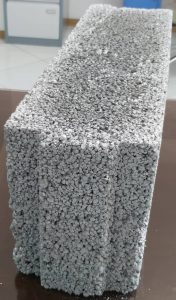

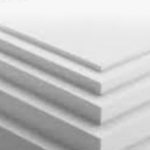
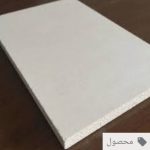
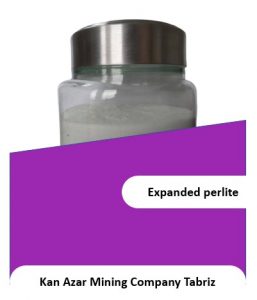
Perlite is an amorphous volcanic glass that contains a relatively large amount of water, which is normally formed by the hydration of obsidian. This happens naturally and gives perlite an unusual property that expands if heated enough. This mineral is a widely used commercial product with low density after expansion operation. In order to increase the use of raw perlite and make it usable in various industries, raw granulated perlite is expanded by heating. Perlite expansion operation requires a lot of experience and skill. Because the characteristics of perlite from different mines can be completely different. The water in the molecular structure of raw perlite boils due to heat shock at about 700 to 1000 degrees and the resulting vapor causes air bubbles or empty cells, and thus the perlite begins to increase in volume and its apparent density to 30 to 150 kg. Is reduced per cubic meter.
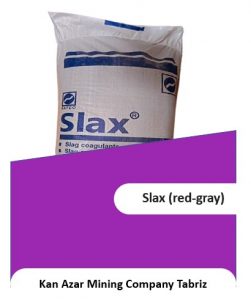
Light (red – gray)
Indications:
Adsorption of slag in steel and cast iron castings through adhesive-like performance and facilitates slag separation